
Moving an office in Norwest or Bella Vista: how do you relocate without losing a trading day?
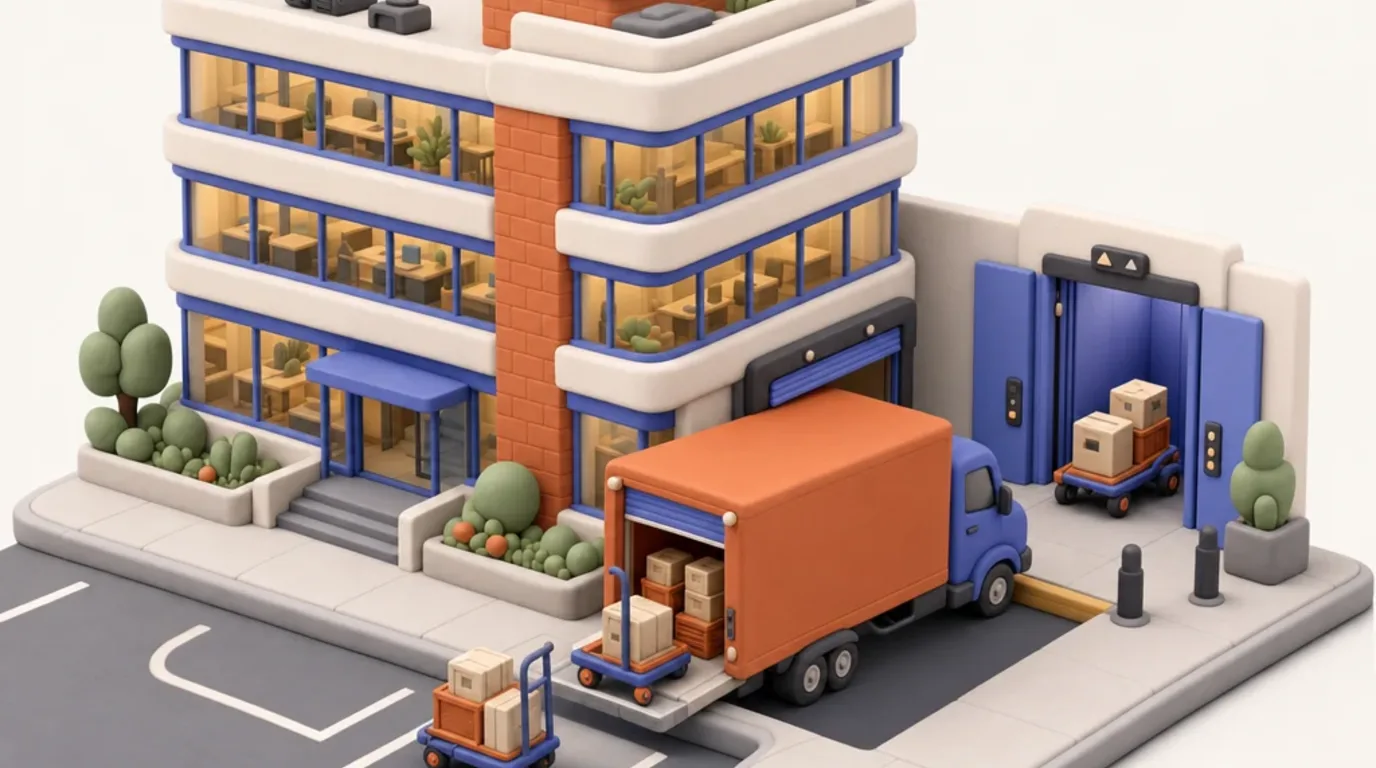
Most of what gets written about moving in the Hills is about houses: the long driveway, the fresh concrete, the new estate. But the Hills is also one of Sydney’s biggest business districts, and moving an office is a genuinely different job to moving a home. The furniture is heavier and more uniform, the technology matters more than the desks, and there is one constraint a house move never has: a trading day you cannot afford to lose.
If you are relocating a business in or around the Norwest Business Park or the Bella Vista commercial precinct, here is how a move runs when the goal is that your team logs in the next morning as if nothing happened.
Why the Hills is a business move at all
It is easy to forget how much commercial floor space sits in this corner of Sydney. The Norwest Business Park was established in the 1980s as Australia’s first large-scale business park, and it now holds around 800 businesses: offices, medical and allied-health suites, showrooms, corporate headquarters and professional services, spread along Norwest Boulevard, Solent Circuit and the streets around them.
The area changed again when the Sydney Metro stations at Bella Vista and Norwest opened on 26 May 2019. The new high-rise towers that have gone up around those stations brought a different kind of business address to the Hills: a leased floor or two in a shared building, with a goods lift and a loading dock you queue for like everyone else in the tower. That single fact, a shared lift and dock, reshapes the whole move.
The thing that runs the day: the lift and the dock
A house move starts at the kerb. An office move in a Norwest or Bella Vista tower starts at a booking.
The towers around the Metro stations share one goods lift and one loading dock between every tenant in the building, so building management runs them on a booking system. You cannot simply arrive with a truck and start carrying. The dock has a window, the lift has a window, and if you have not booked them, the slot may belong to the tenant three floors up.
So the first move on a business relocation is not lifting anything. It is confirming, with the building manager at both ends, when the dock is yours and when the lift is yours. We do that before move day rather than discovering a taken dock on it. Where a building has tight or scarce windows, that booking often decides the date of the whole move.
Protecting the trading day
The second constraint is the one that makes business moves stressful: every hour the office is in transit is an hour the business is not really working.
The usual answer in Norwest and Bella Vista is to move outside trading hours. A Friday-evening-into-Saturday run, or a move across a full weekend, lets the old office empty after close of business and the new one be set up before Monday. The team leaves one office on Friday and walks into a working one on Monday, instead of spending half a week unpacking around their desks. After-hours moves have a second benefit too: the building’s dock and lift are quieter then, so the booking is easier to get and the run is faster.
The trade is that an after-hours or weekend move needs to be locked in early, because the crew and the slot both have to be held. It is worth it. The cost of a planned weekend move is almost always less than the cost of a Monday nobody could work.
The IT is the part that has to go right
In a house move the precious things are the piano and the glassware. In an office move they are the computers, the screens, the server and the comms gear, and the thing that actually matters is that they go back together and in the right place.
The method is crating and labelling. We crate IT separately from furniture, keep each machine’s cables and parts with it, and label everything by desk or by user, so a workstation comes off the truck and goes back to the right desk rather than into one anonymous pile to be sorted out on Monday. Heavy or sensitive gear, servers, comms racks, large format printers, gets the right trolleys and padding. Reconnecting and testing is usually your IT person’s or provider’s job; our part is to make their morning easy by delivering each setup back to its desk, the right way up, with all its pieces.
It is also a real safety point, not just a tidy one. Hazardous manual tasks, the lifting, carrying and moving of heavy or awkward loads, are a main cause of musculoskeletal injuries in NSW workplaces. A full office of desks, filing and IT is a lot of awkward lifting, and it is far better done by a crew with trolleys, straps and the right technique than by your own staff treating moving day as a team-building exercise.
How a Hills office move usually runs
Put it together and a smooth business move in Norwest or Bella Vista looks like this:
- Confirm the dock and lift at both buildings with building management, and let that set the date.
- Schedule the run after hours or across a weekend so no trading day is lost.
- Crate and label by desk, with IT crated separately and parts kept together.
- Move and place each setup back to the right desk at the new office, ready for reconnection.
- Be set up before Monday, so the team logs in to a working office.
We will walk through your inventory, the access and dock arrangements at both buildings, and your quietest trading window when we quote, so the plan and the price match the real job rather than a hopeful version of it. Our rates are $250 an hour for two movers and a truck, $350 for three movers, and $500 for a four-mover, two-truck crew, billed hourly from arrival to finish.
Relocating a business in Norwest, Bella Vista or anywhere across the Hills? Get a free, no-obligation quote and we will plan the dock, the lift and the timing so your team doesn’t lose a day.
Common questions
Do you need to book the goods lift and loading dock for an office move in Norwest?
Almost always, yes. The towers around the Norwest and Bella Vista Metro stations share their goods lift and loading dock between every tenant, so building management runs a booking system for them. We confirm your window with the building manager before move day rather than turning up to a dock that another tenant has for the afternoon. If you tell us your building when you book, sorting the lift and dock is one of the first things we do.
Can you move our office after hours or over a weekend to avoid downtime?
Yes, and for most Norwest and Bella Vista businesses that is exactly how we run it. Moving on a Friday evening into Saturday, or across a weekend, means the old office empties after close of business and the new one is set up before Monday, so the team walks into a working office instead of a pile of crates. After-hours moves also line up better with the building's quieter dock and lift periods.
How do you handle computers, screens and server gear in an office move?
Carefully and labelled. We crate IT separately, keep cables with their machines, and label everything by desk or by user so it goes back where it belongs rather than into one anonymous heap. Heavy and sensitive gear like servers and comms racks is moved with the right trolleys and padding. Reconnecting is usually your IT person's or provider's job, but we make their morning easy by delivering each setup back to the right desk, the right way up, with its parts together.
How far ahead should we plan a business move in the Hills?
The earlier the better, because the constraints are other people's calendars, not just ours. The building's loading-dock and goods-lift bookings, your lease handover dates at both ends, and your own quietest trading window all have to line up. A few weeks of notice lets us hold the right crew and the right after-hours slot; a few days means taking whatever dock window is left. Tell us your move-out and move-in dates as soon as you know them.
What does an office move cost compared with a house move?
It is quoted the same way, by the crew and the hours, but the shape of the job is different: more careful crating and labelling, IT to handle, and an after-hours or weekend window. Our rates are $250 an hour for two movers and a truck, $350 for three movers, and $500 for a four-mover, two-truck crew, billed hourly from arrival to finish. We will walk through your inventory, your access at both buildings and your timing when we quote, so the estimate matches the real job. Hazardous manual tasks are a main cause of musculoskeletal injuries in NSW workplaces, which is one good reason to have the heavy crating and lifting done by a crew with the right gear rather than by your own staff on moving day.
Planning a move?
Get a free, no-obligation quote and we'll plan the access at both ends with you.
Get a quote